Campus and Facilities
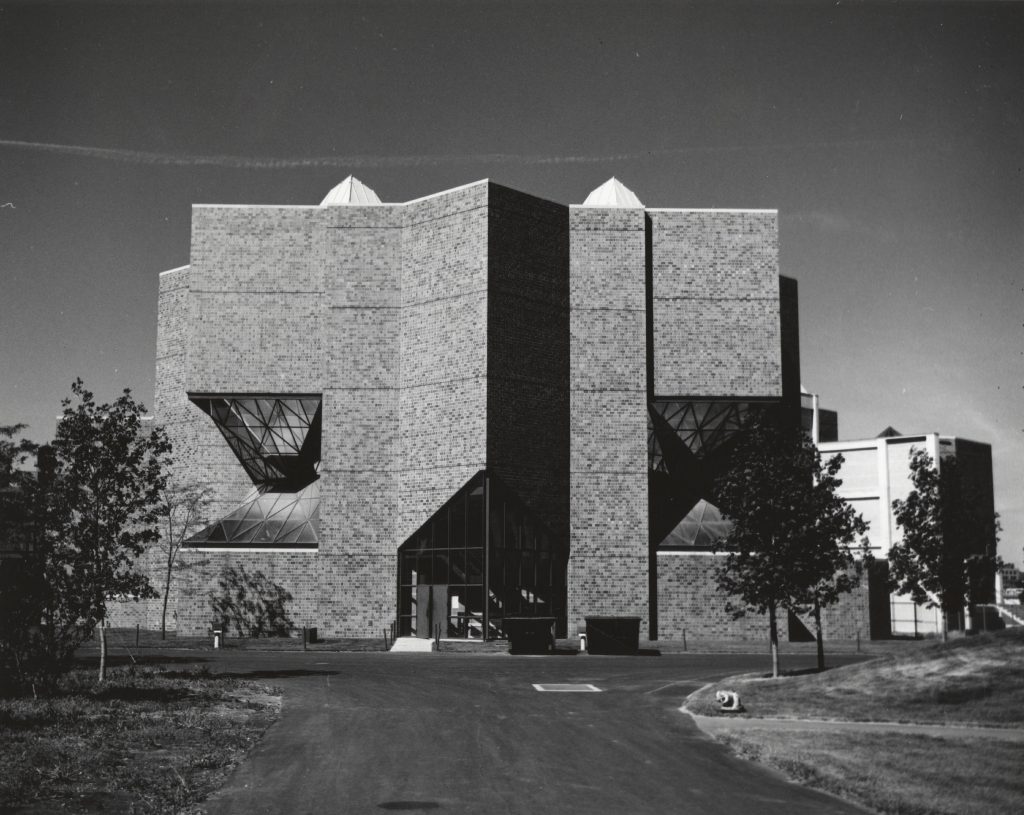
The School of Design is located in the Architecture + Design Studios building (ADS), on UIC’s East Campus.
Most Design classes and events take place in ADS, which is also home to a dedicated Design print lab and photo studio, a metal and wood shop, a digital fabrication lab, and an archive/library. The school shares the building with the School of Architecture.
Our facilities support the range of skills required of twenty-first-century design professionals, from the craft-based traditions of design making to the leadership skills of design thinking.
Studios and Exhibition Spaces
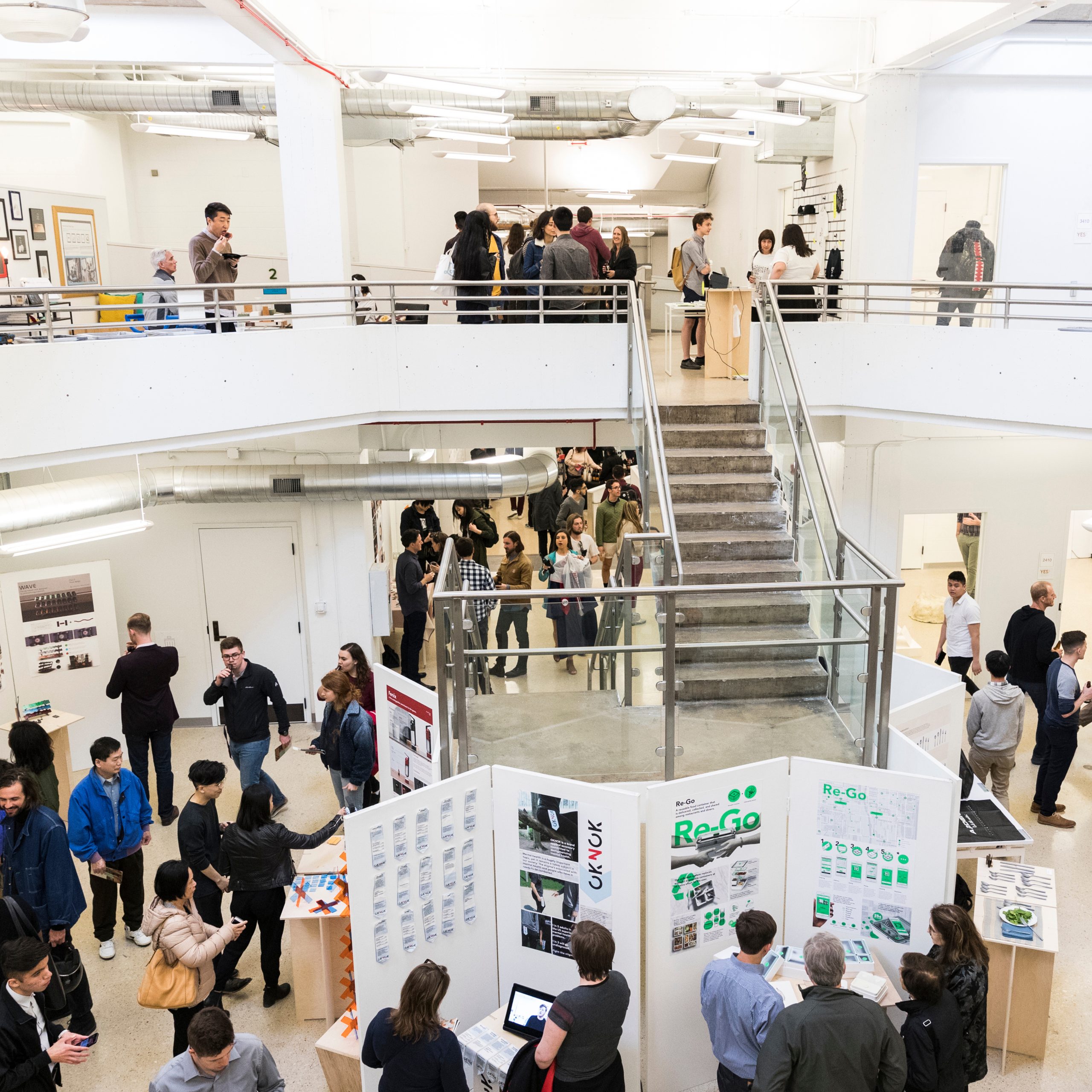
Our school is designed to support guided individual instruction and collaborative exchange. Our atrium and public spaces serve as galleries for student work as well as an open workspace that encourages community-building and student collaboration. With their UIC IDs, students have 24/7 access to our public spaces.
Print Lab and Photo Studio
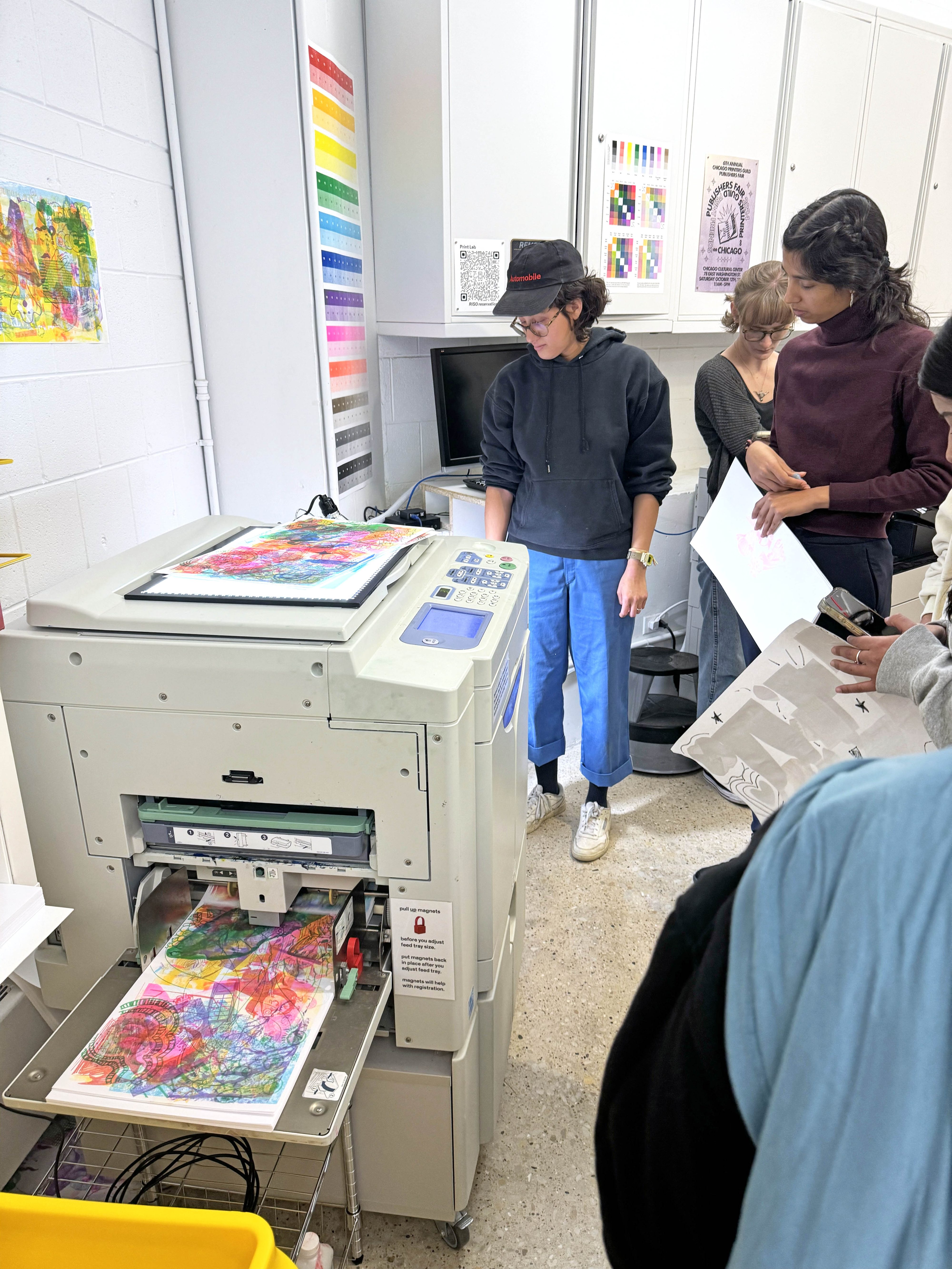
Our Print Lab offers equipment for:
- Color laser and inkjet printing
- Large-format printing
- Risograph printing
- Letterpress printing
- Foil stamping
- Bookbinding
Students can also check out camera equipment, laptops, power chargers, production tools, and other supplies. The Photo Studio supports coursework as well as individual student projects.
Full-time lab staff and student employees are available to train and consult with students.
Project Lab and Fabrication Lab
The School of Design and the School of Architecture jointly operate the Project Lab and the Digital Fabrication Lab (Fab Lab). Easily accessible on the first floor of our shared building, these labs foster skill-building and student exchange between the two schools.
The Project Lab offers equipment for foam, wood, and metal model-making, including a CNC router and a variety of table saws. The Fab Lab houses a 3D scanner, 3D printers, laser cutters, and other equipment that encourages experimentation and the production of prototypes.
Both labs are supervised by full-time staff who conduct required student training sessions each semester. Additional safety checks and guided instruction ensure that all students learn how to use the laboratory equipment safely, with no prior experience necessary.

Open Archive
Open in Fall 2024, the Architecture and Design Open Archive is a special collection and research room that provides on-site access to reference books and journals, print ephemera, and three-dimensional objects that reflect and inspire design ideas in both schools.

Affiliated Resources
Design students also have access to:
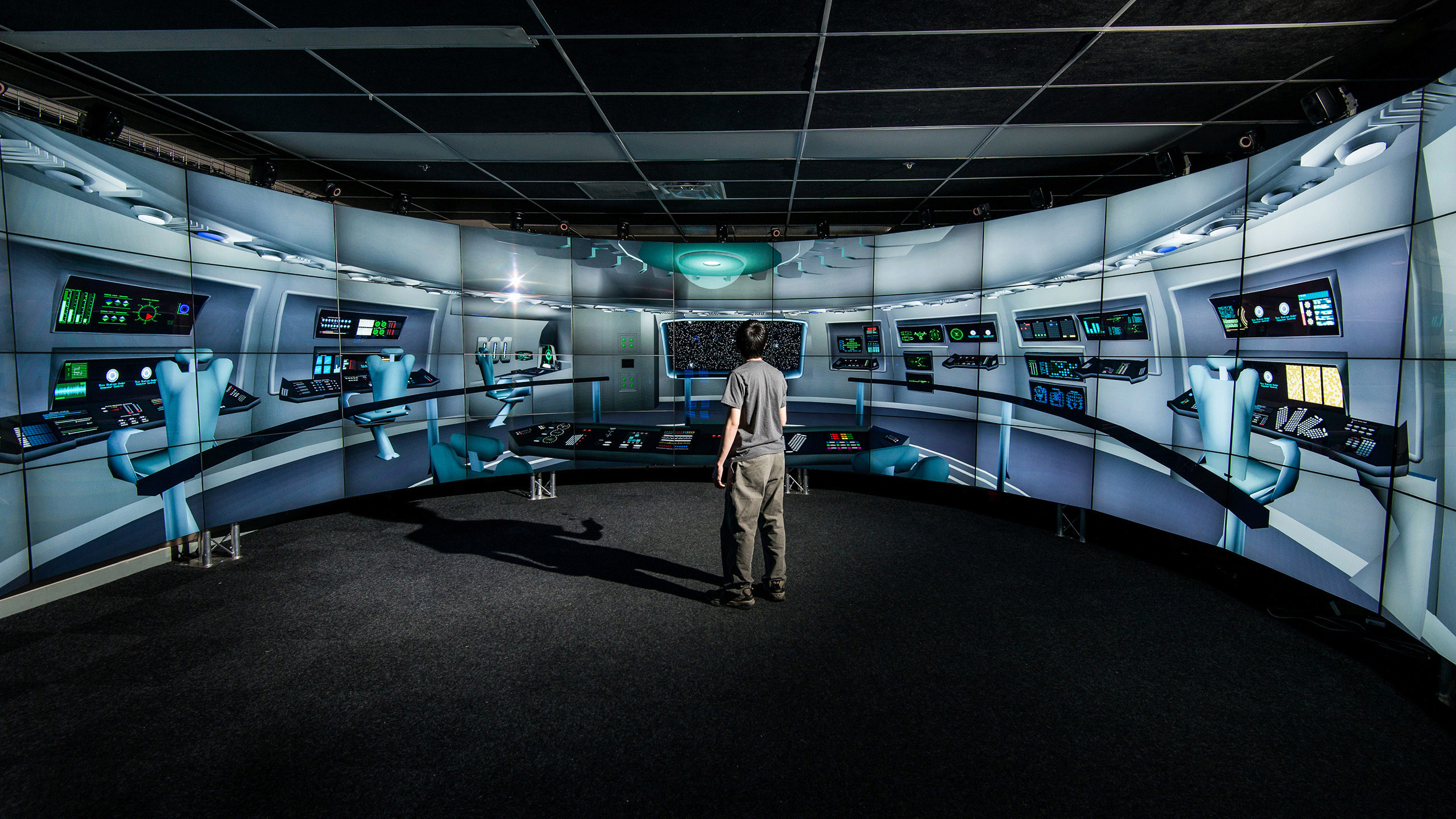
- UIC’s world-renowned Electronic Visualization Laboratory (EVL), which includes immersive projection and virtual reality systems
- The UIC Innovation Center, where interdisciplinary student and faculty teams work collaboratively with university, business, and cultural partners
About the Architecture + Design Studios
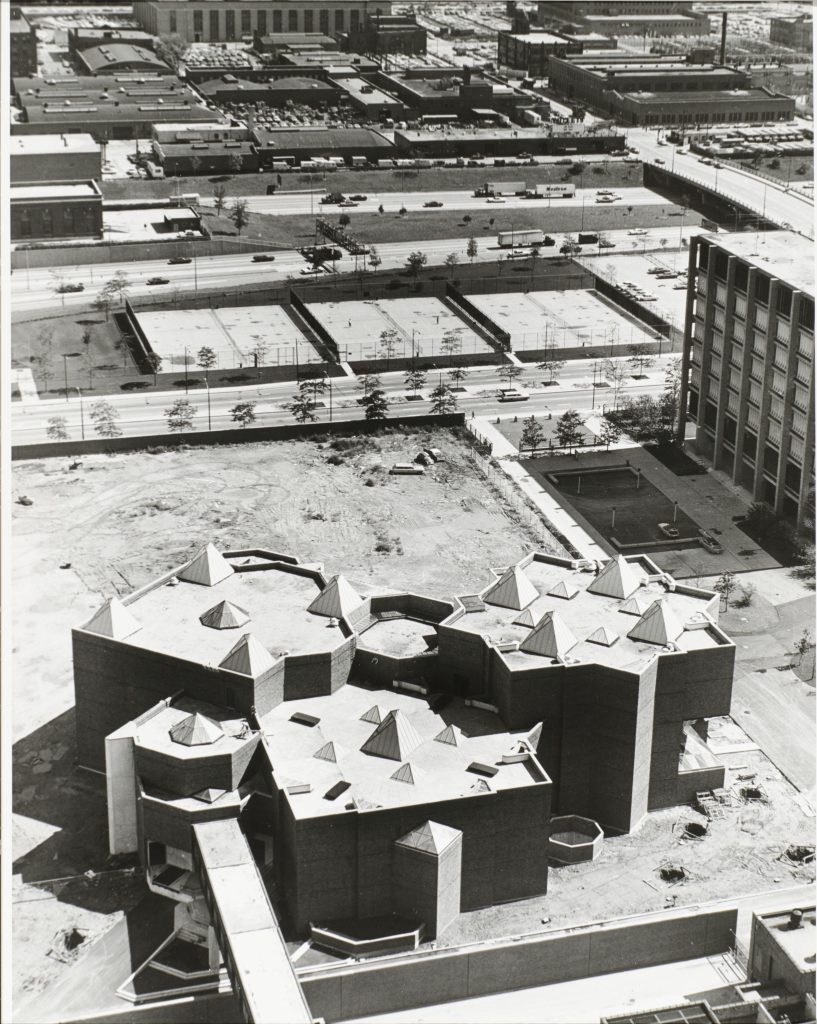
ADS dates to the construction of the current university campus, designed by the architect Walter Netsch, of Skidmore, Owings & Merrill. The building opened in 1968.
The University of Illinois Chicago Circle was designed to be a modern, compact campus that would bring higher education to Chicago’s working residents. Buildings were clustered by function, rather than discipline, to encourage more interaction among students. All clusters were arranged concentrically around the Circle Forum (now known as the Quad), a design inspired by the rings generated by a pebble dropped in a pool of water. Netsch likened this layout to “knowledge spreading out” among the students and faculty—a metaphor for interdisciplinary collaboration. The original campus design featured an elevated walkway system intended to alleviate congestion among the close-set buildings, though the walkways have since been taken down.
For more on the campus design, see:
- YouTube video by School of Architecture faculty member Stewart Hicks
- UIC Library digital exhibition: The Historic Netsch Campus
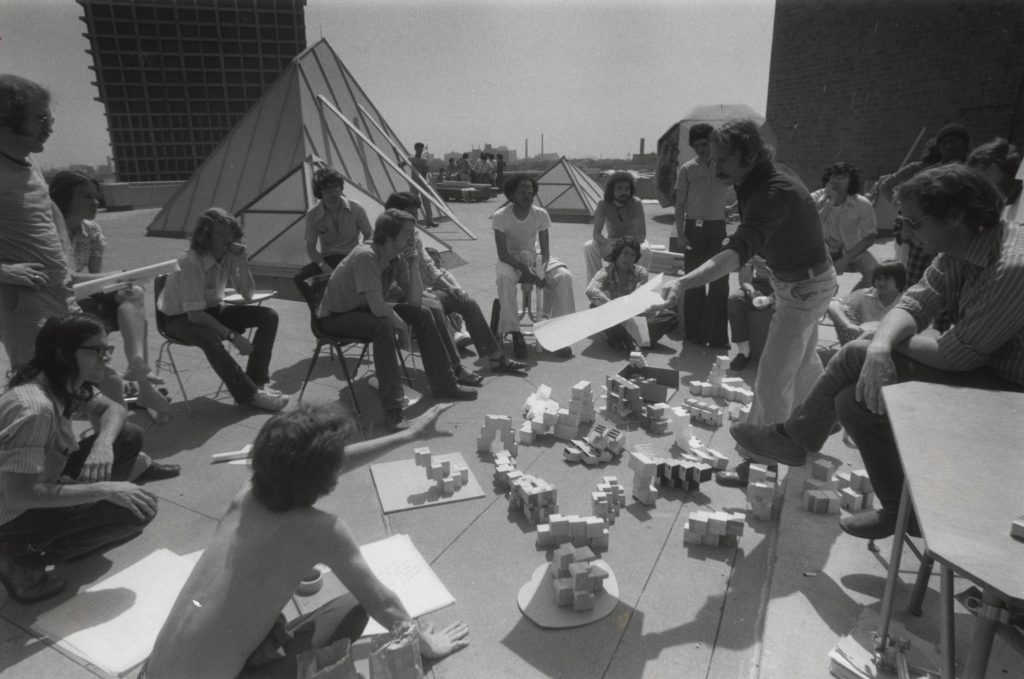
After designing a first set of concrete (often referred to as “Brutalist”) buildings for the UIC campus, Netsch kept experimenting with rectangular forms, brick, precast concrete, and glass exteriors. Netsch based the Architecture + Design Studios building on what he called “Field Theory,” an approach to generating three-dimensional geometry based on the double helix form of DNA. The plans of the ADS building feature a series of rotating squares stacked on top of one another, twisting and adapting the strict geometry. With Field Theory, Netsch turned corridors into exhibition spaces, stairs into amphitheaters, and roofs into classrooms.
For more campus resources, visit the university’s “Life at UIC” page.